

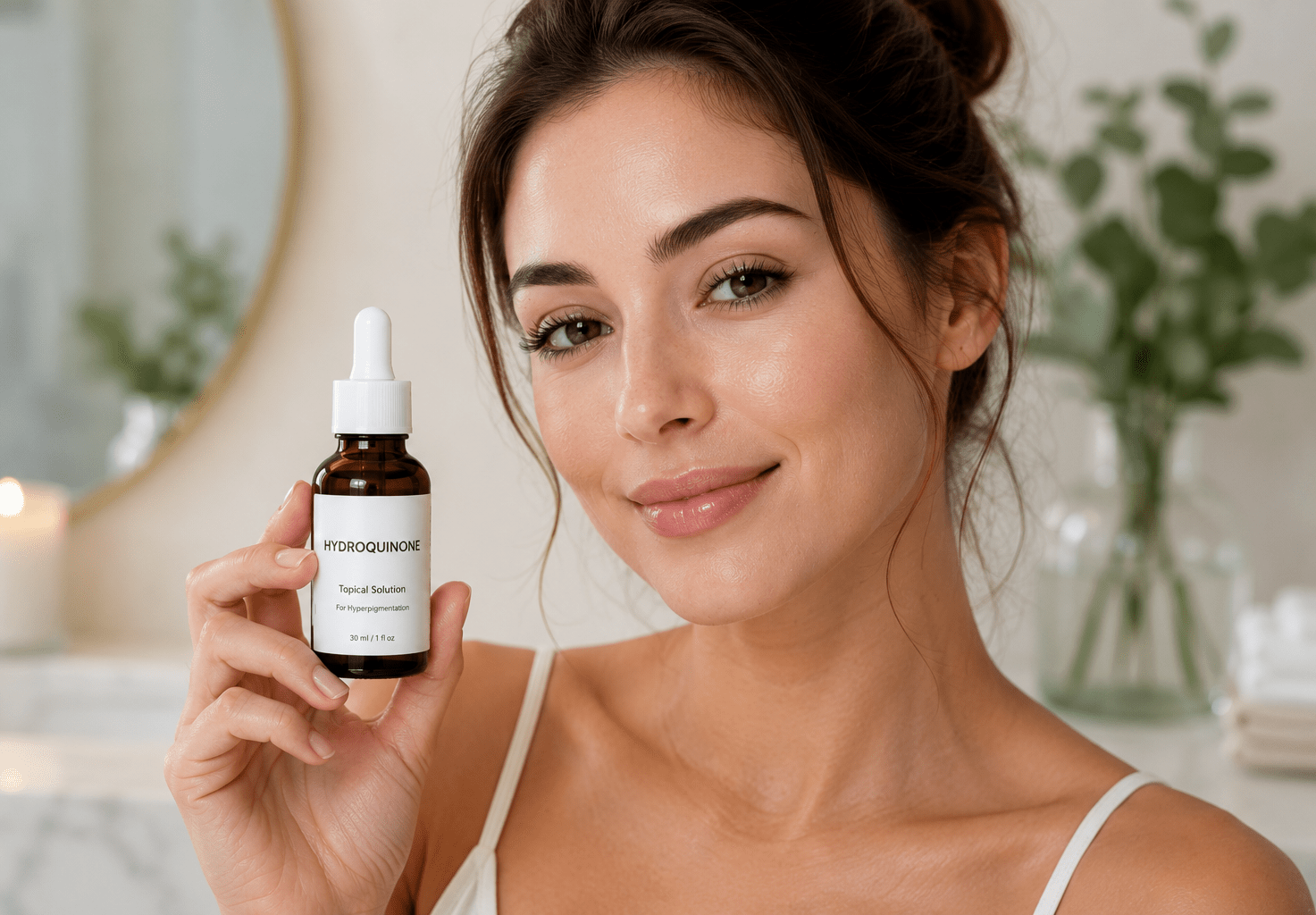
Hydroquinone for Melasma: Benefits, Risks, and How to Use It Safely
Hydroquinone for melasma helps lighten dark patches by reducing excess pigment production in the skin.
Melasma is a common skin condition that causes brown or grayish patches to appear on the face, especially on the cheeks, forehead, nose, and upper lip. While melasma can be persistent, hydroquinone is one of the most widely used prescription ingredients for treating facial hyperpigmentation.
Hydroquinone cannot permanently cure melasma, but it may help improve the appearance of discoloration when used correctly under professional supervision.
Understanding what causes melasma is an important first step toward choosing the right treatment plan.
What Is Hydroquinone?
Hydroquinone is a topical skin-lightening ingredient available in creams, serums, and gels. It works by reducing the production of melanin, the natural pigment responsible for skin color.
Many dermatologists consider hydroquinone a standard treatment for melasma and other forms of hyperpigmentation.
It may also be used to improve the appearance of:
- Sun spots
- Age spots
- Post-inflammatory hyperpigmentation
- Acne marks
- Uneven skin tone
How Does Hydroquinone Work?
Hydroquinone helps slow the activity of melanocytes, the cells that produce melanin. As pigment production decreases, dark patches may gradually become lighter over time.
Results often develop slowly and require patience and consistent use.
Many people combine hydroquinone with other effective melasma treatment options for better long-term management.
Effective Melasma Treatment Options
What Causes Melasma?
Several factors may contribute to melasma, including:
- Sun exposure
- Visible light exposure
- Hormonal changes
- Pregnancy
- Birth control medications
- Genetics
- Heat
- Skin inflammation
Men and women can both develop melasma, although women are affected much more frequently.
Some experts also believe that visible blue light from electronic devices may contribute to pigmentation in certain individuals.
How to Use Hydroquinone for Melasma
For best results, hydroquinone should be used exactly as recommended by a qualified healthcare professional.
A typical routine may include:
- Cleanse the skin.
- Apply toner if desired.
- Apply a small amount of hydroquinone to affected areas.
- Follow with moisturizer.
- Wear broad-spectrum sunscreen every morning.
Many people begin with lower concentrations to reduce the risk of irritation.
Can Hydroquinone Cause Side Effects?
Like many active skincare ingredients, hydroquinone may cause side effects in some individuals.
Possible reactions include:
- Dryness
- Redness
- Mild irritation
- Skin sensitivity
Avoid applying hydroquinone to broken skin, open wounds, or active rashes.
Using excessive amounts or prolonged treatment without professional supervision may increase the risk of unwanted skin changes.
Who Should Avoid Hydroquinone?
Hydroquinone may not be appropriate for everyone.
Pregnant or breastfeeding individuals should consult their healthcare provider before using hydroquinone or other skin-lightening treatments.
People with sensitive skin may also require additional guidance before beginning treatment.
The Importance of Sunscreen
Sun exposure remains one of the biggest triggers for melasma. Daily sunscreen is essential while using hydroquinone because ultraviolet and visible light can quickly reverse progress.
A broad-spectrum mineral sunscreen containing zinc oxide with SPF 30 or higher is often recommended.
Choosing the best sunscreen for melasma is one of the most important steps in preventing dark patches from returning.
Long-Term Melasma Maintenance
Hydroquinone is often used as part of a larger skincare strategy. Because melasma can return, many people eventually transition to maintenance products that support the skin barrier and reduce irritation.
A consistent skincare routine may include:
- Gentle cleanser
- Hydrating toner
- Antioxidant serum
- Melasma treatment serum
- Moisturizer
- Zinc oxide sunscreen
Following a daily melasma skincare routine may help maintain healthier-looking skin and reduce future flare-ups.
Frequently Asked Questions
Is hydroquinone the best treatment for melasma?
Hydroquinone is one of the most widely studied treatments for melasma, but the best approach depends on your skin type and individual needs.
How long does hydroquinone take to work?
Many people begin noticing gradual improvement after several weeks of consistent use.
Can hydroquinone permanently remove melasma?
No. Melasma often requires ongoing maintenance because pigmentation can return.
Is sunscreen necessary while using hydroquinone?
Yes. Daily sunscreen is one of the most important parts of any melasma treatment plan.
Final Thoughts
Hydroquinone for melasma may help reduce the appearance of stubborn dark patches by slowing melanin production. While it is considered one of the most effective topical treatments available, the best results usually come from combining hydroquinone with gentle skincare, daily sunscreen, and long-term skin protection.
Protecting the skin barrier and avoiding unnecessary irritation can help support healthier-looking skin over time.
If you are also treating acne marks or post-inflammatory pigmentation, a dark spot remover for face products may complement your skincare routine.
Looking for Hydroquinone Alternatives and Skincare Products?
If you’re building a melasma skincare routine, choosing gentle products that support the skin barrier may help maintain a brighter, more even-looking complexion. While no single product can permanently cure melasma, a complete skincare routine can complement professional treatment.
You can check the latest price and read customer reviews by visiting Amazon below.
👉 Shop Hydroquine Skincare Products on Amazon
👉 Shop NON-Hydroquine Skincare Products on Amazon
Healthline’s View On Hydroquinone