

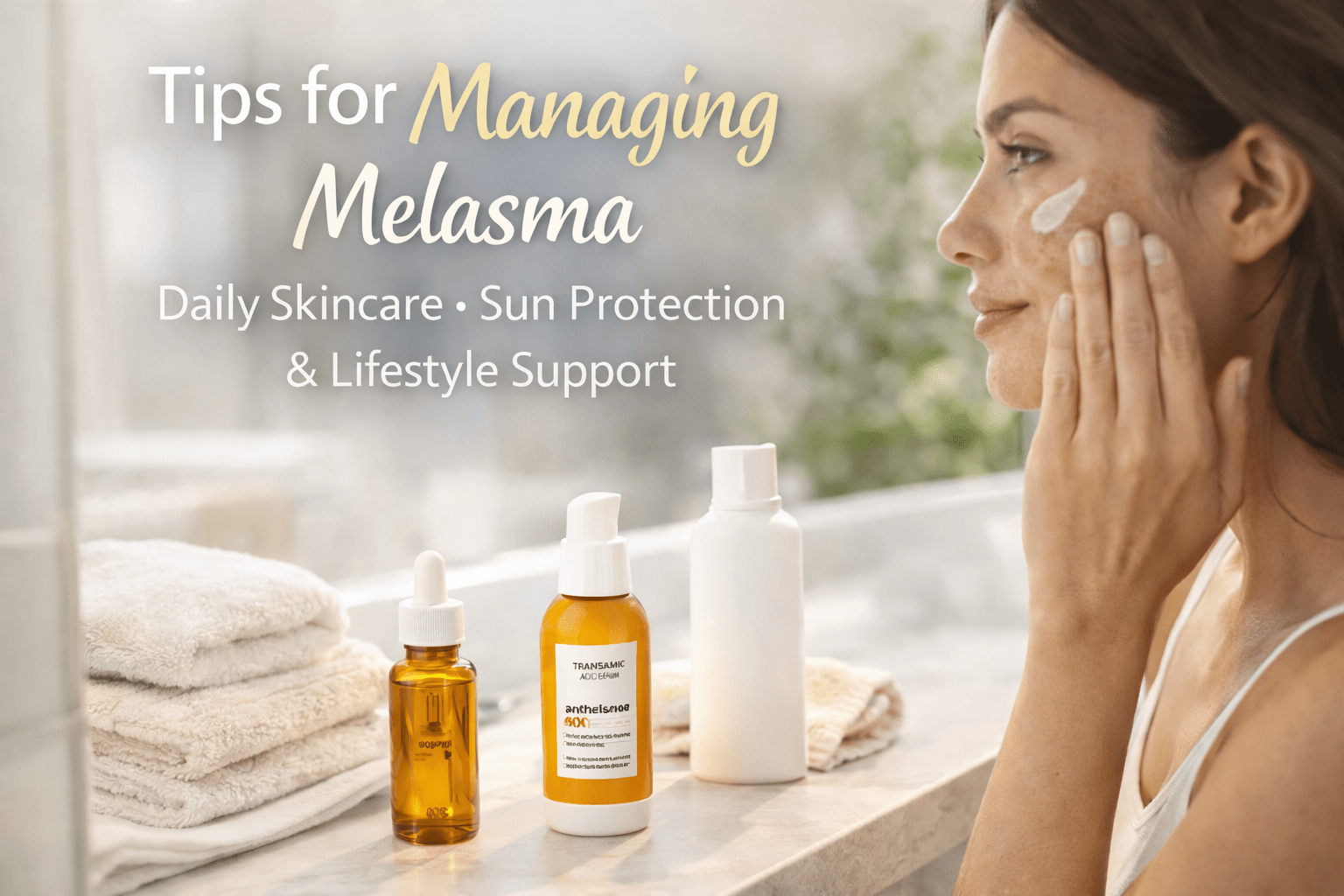
How To Manage Melasma: Daily Skincare, Sun Protection, and Lifestyle Tips
Melasma can be one of the most frustrating skin concerns to manage because dark patches often return even after improvement. Learning how to manage melasma with the right daily skincare, sunscreen, and lifestyle habits can help prevent flare-ups and support a brighter, more even-looking complexion.
Melasma is commonly triggered by sun exposure, heat, hormones, inflammation, and skin irritation. Because it is a chronic form of hyperpigmentation, consistency matters more than using too many products.
If you are new to this condition, start by reading our What Is Melasma on the Face? Causes, Triggers, and Best Treatments guide.
1. Commit to Daily Sun Protection
This is the most important step in managing melasma.
Even brief sun exposure can cause pigmentation to darken or return.
Choose a broad-spectrum tinted mineral sunscreen SPF 30 or higher that contains:
- zinc oxide
- titanium dioxide
- iron oxides
Tinted mineral sunscreen is especially important because melasma can worsen from visible light and heat, not just UV rays.
For best results:
- apply every morning
- reapply every 2 hours outdoors
- wear a wide-brim hat
- wear sunglasses
- seek shade whenever possible
Without consistent sunscreen, melasma often becomes harder to fade.
2. Keep Your Skincare Routine Gentle and Consistent
One of the biggest mistakes with melasma is over-treating the skin.
Harsh exfoliants, scrubs, aggressive acids, and too many active ingredients can increase inflammation and worsen pigmentation.
Focus on a simple routine:
- gentle hydrating cleanser
- brightening serum
- barrier-supportive moisturizer
- daily tinted mineral SPF
A calm skin barrier helps reduce flare-ups and supports long-term improvement.
For a full morning and evening routine, read our Best Melasma Skincare Routine guide:
3. Choose Ingredients That Help Fade Melasma
The best ingredients for melasma work gradually over time.
Look for products that include:
Niacinamide
Helps improve uneven tone while supporting the skin barrier.
Azelaic Acid
A gentle brightening ingredient that is often well tolerated by sensitive skin.
Vitamin C
Helps brighten skin and protect against environmental stress.
Tranexamic Acid
One of the most popular ingredients for stubborn hormonal melasma.
Thiamidol
A strong hydroquinone alternative for pigment support.
Consistency is key.
Most people begin seeing improvement in 8 to 12 weeks, while deeper pigmentation may take longer.
4. Avoid Heat and Hidden Triggers
Melasma is not caused by sun alone.
Heat can also worsen pigmentation.
Common triggers include:
- hot yoga
- saunas
- cooking over the stove
- long hot showers
- excessive outdoor heat
- visible light exposure
- stress
- poor sleep
Many people notice flare-ups during stressful periods or after heat exposure.
Lifestyle habits matter just as much as skincare.
For more support, read:
5. Support Skin Health From Within
Internal factors often play a major role in melasma.
Helpful lifestyle habits include:
- antioxidant-rich foods
- omega-3 fatty acids
- stress management
- good sleep hygiene
- hormone awareness
- hydration
A healthy skin barrier and reduced inflammation can help support brighter, clearer-looking skin over time.
6. Be Patient With Your Results
Melasma takes time.
Unlike simple dark spots, it often requires weeks to months of consistent care.
Even after improvement, maintenance is usually needed.
Do not be discouraged if progress feels slow.
Small daily habits create the biggest long-term results.
Frequently Asked Questions About Managing Melasma
What makes melasma worse?
Sun exposure, heat, hormones, stress, and skin irritation are the most common triggers.
Can melasma fade naturally?
It may lighten over time, but daily sunscreen and consistent skincare are usually necessary.
What is the best sunscreen for melasma?
A tinted mineral sunscreen with zinc oxide and iron oxides is often best.
How long does melasma take to improve?
Most people need 8–12 weeks of consistent care, with deeper pigmentation taking longer.
Final Thoughts
Learning how to manage melasma is about consistency, protection, and patience.
Gentle skincare, targeted brightening ingredients, and daily tinted mineral sunscreen can make a major difference over time.
If you want a complete step-by-step guide to understanding triggers, ingredients, routines, and lifestyle support, explore our Complete Melasma Care Guide Ebook.

Shop Brightening Favorites