

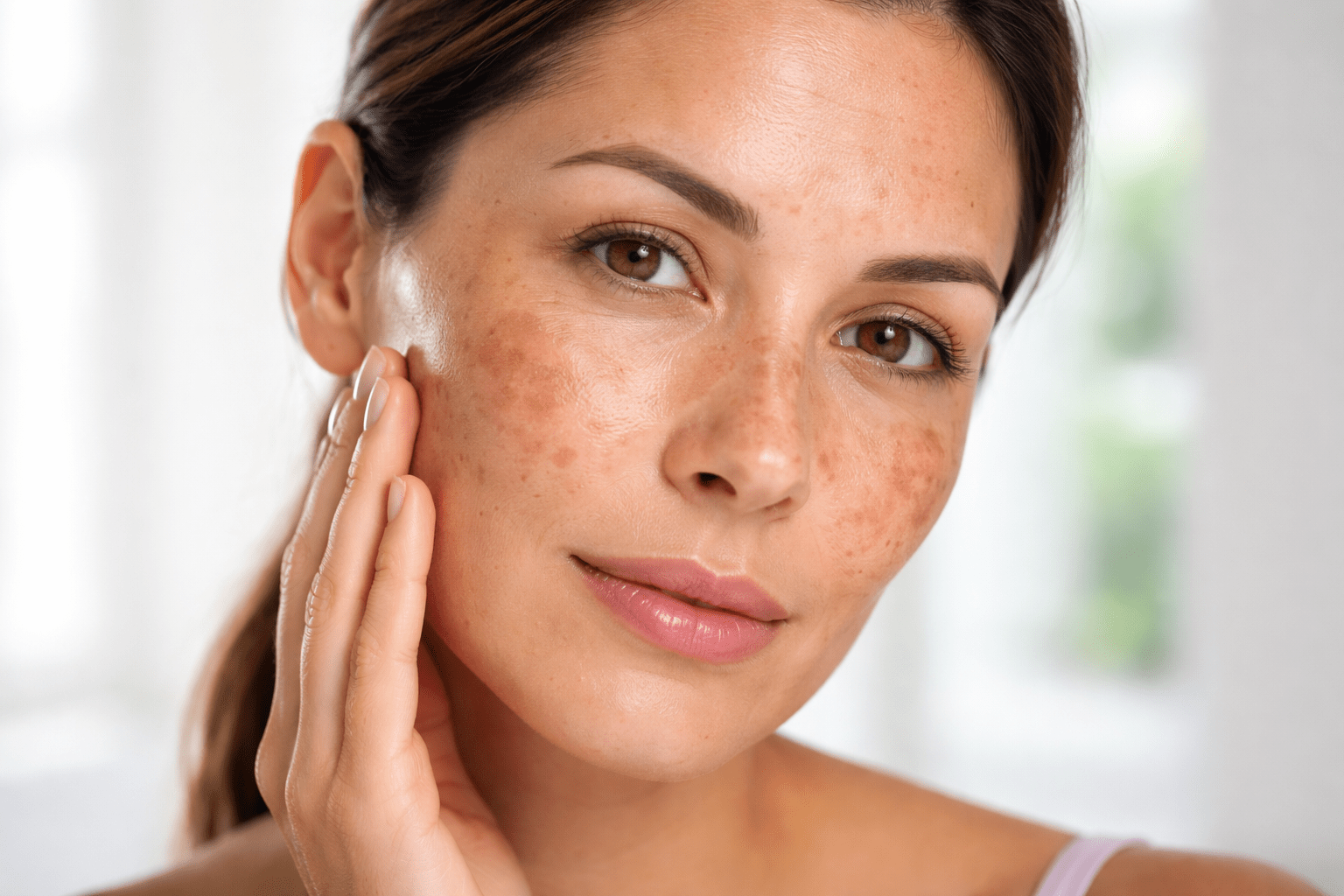
What Is Melasma on the Face? Causes, Triggers, and Best Treatments
Melasma on the face causes dark patches, uneven skin tone, and stubborn facial discoloration over time.
Melasma on the face is a common skin condition that causes brown, gray-brown, or patchy discoloration, usually on the cheeks, forehead, nose, upper lip, and chin.
It is often triggered by sun exposure, hormones, heat, inflammation, and genetics. While melasma is harmless, it can be difficult to treat without the right skincare routine and daily sun protection.
Melasma is one of the most common forms of facial hyperpigmentation, especially in women and those with medium to deeper skin tones. It often appears as symmetrical patches and can become darker with sunlight, heat, hormonal changes, stress, and skin irritation.
At Serene Skin Health, our goal is to help you understand what melasma is, what causes it, and how to treat it with both medical-grade and lifestyle approaches.
What Does Melasma Look Like?
Melasma usually appears as flat brown or gray-brown patches on the face. The most common areas include:
- cheeks
- forehead
- bridge of the nose
- upper lip
- chin
- jawline
Unlike acne scars or isolated dark spots, melasma often appears in larger patch-like areas and usually affects both sides of the face.
Some people notice it worsening after summer, vacations, pregnancy, birth control changes, or stressful periods.
What Causes Melasma on the Face?
Melasma is caused by overactive pigment-producing cells called melanocytes.
These cells produce extra melanin when triggered by internal and external factors.
The most common causes include:
Sun exposure
UV rays are one of the biggest triggers. Even a few minutes of daily sun exposure can worsen melasma.
Hormones
Hormonal shifts are a major cause, especially:
- pregnancy
- birth control pills
- hormone replacement therapy
- estrogen and progesterone fluctuations
For a deeper look, read our guide on what hormones cause melasma.
Heat
Heat can stimulate pigment production even without direct sunlight. This includes hot yoga, saunas, cooking over the stove, and warm outdoor temperatures.
Inflammation
Harsh skincare products, aggressive exfoliation, or irritation can make melasma worse.
Genetics
Melasma often runs in families.
Why Melasma Gets Worse
Melasma is known for recurring because the pigment cells remain easily triggered.
Common worsening triggers include:
- sun exposure
- chemical sunscreens that do not provide enough mineral protection
- hormones
- heat
- alcohol
- poor sleep
- stress and elevated cortisol
- skin inflammation
You may also enjoy our related guides:
- why alcohol can worsen melasma
- why sleep is important for melasma
- how stress hormones affect pigmentation
These supporting articles should all internally link back to this main page.
Best Ingredients for Treating Melasma
The best melasma ingredients focus on reducing pigment formation and calming inflammation.
Vitamin C
Helps brighten skin and reduce oxidative stress.
best vitamin C cleanser for melasma
Tretinoin
Improves cell turnover and helps fade discoloration.
Tranexamic Acid
A favorite for stubborn hormonal melasma.
Thiamidol
An excellent hydroquinone alternative for pigmentation.
Niacinamide
Helps reduce pigment transfer and calm redness.
Best Sunscreen for Melasma
Sunscreen is the most important step in any melasma routine.
A mineral sunscreen with zinc oxide and iron oxides is best because it protects against:
- UVA
- UVB
- visible light
- heat-related pigment triggers
Tinted mineral sunscreens are often ideal for melasma.
Be sure to reapply every 2 hours when outdoors.
Professional Treatments for Melasma
For more stubborn cases, professional treatments may help.
These may include:
- customized facials
- light chemical peels
- physician-guided medical-grade skincare
- microneedling in select patients
- pigment correction programs
If you live in California, our guide on medical-grade melasma skincare offers additional support.
Can Melasma Go Away Naturally?
Melasma may improve naturally if the trigger is removed, such as after pregnancy or stopping certain hormones.
However, many cases are chronic and require maintenance.
The good news is that with the right skincare and sun protection, it can significantly fade.
Best Daily Skincare Routine for Melasma
Morning
- gentle cleanser
- antioxidant toner
- vitamin C serum
- brightening serum
- tinted mineral SPF
Evening
- gentle cleanser
- antioxidant toner
- pigment serum
- tretinoin or retinol
- calming moisturizer
Consistency matters more than using too many products.
Frequently Asked Questions About Melasma
Is melasma permanent?
Melasma is chronic but can greatly improve with consistent treatment.
Why does melasma keep coming back?
Because pigment cells remain sensitive to triggers like sun, hormones, and heat.
What is the best treatment for melasma?
Daily sunscreen combined with brightening ingredients and medical-grade skincare.
Can stress make melasma worse?
Yes, elevated cortisol and inflammation may worsen pigmentation.
Continue Your Melasma Journey
For a deeper understanding of what triggers your pigmentation and how to build the best skincare routine, explore our complete melasma education resources and product guides throughout Serene Skin Health.
For even more expert guidance, download our melasma ebook to learn the best ingredients, routines, and lifestyle tips for clearer, brighter skin.
This is the perfect place to naturally guide readers into your ebook and improve conversions.
Continue Reading: Melasma Guides
- What hormones cause melasma
- Best vitamin C cleanser for melasma
- Tretinoin for melasma
- Tranexamic acid for melasma
- Best zinc sunscreen for melasma
- Does alcohol worsen melasma
- Sleep and melasma
- High cortisol and melasma