


What Melasma Looks Like – A Complete Guide To Identifying Melasma
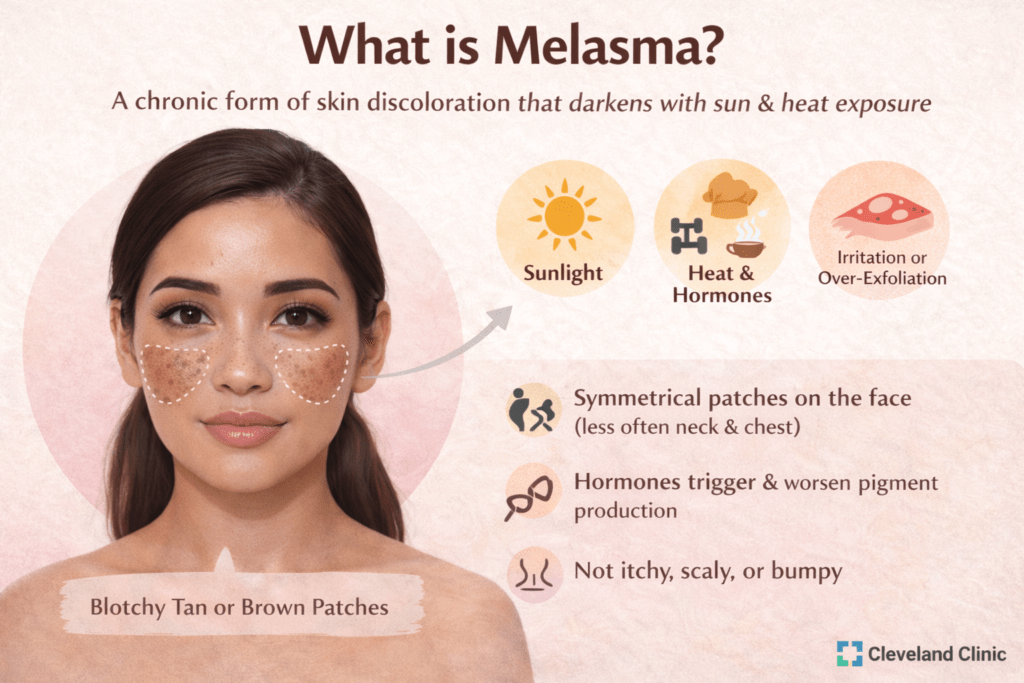
Typically, melasma appears as dark, patchy discoloration pigment of the skin on sun exposed areas.
If you’ve noticed brown or grayish patches on your face that darken with sun exposure or heat, you may be wondering whether it is melasma.
Understanding what melasma looks like is the first step toward choosing the right treatment and preventing flare-ups. Melasma differs from other dark spots, and recognizing its unique characteristics helps avoid treatments that can worsen pigmentation.
This guide explains the visual signs of melasma, its common locations, types, key triggers, and how to tell it apart from other pigmentation conditions.
How to Identify Melasma on Your Skin
Melasma appears as flat, smooth areas of discoloration that never feel raised, itchy, dry, or scaly. The skin texture remains completely normal, even when the color appears darker.
The patches usually develop gradually and may darken, spread, or fade depending on sun exposure, heat, hormones, and skincare habits.
If you are unsure whether your pigmentation is melasma or another condition, comparing it with sunspots and post-inflammatory hyperpigmentation (PIH) can help clarify the difference.
Key Visual Clues That Suggest Melasma
Color
Melasma can appear in shades of light tan, warm brown, deep brown, gray-brown, or bluish-gray. The color often looks deeper or duller than freckles or sunspots, especially in deeper skin tones.
Shape
The patches are irregular in shape but have soft, blended edges rather than sharp borders.
Symmetry
Melasma almost always appears symmetrically on both sides of the face, often mirroring itself.
Texture
The skin feels completely smooth with no flaking, bumps, or redness.
One of the defining features of melasma is that it affects skin color without changing skin texture.
Where Melasma Appears Most Often
Melasma typically forms in sun-exposed and heat-sensitive areas, including:
- Cheeks
- Forehead
- Bridge of the nose
- Upper lip, often called the “melasma mustache”
- Chin and jawline
In some cases, melasma can also appear on the neck, chest, or forearms, especially with chronic sun exposure.
Heat is an often-overlooked trigger and can worsen melasma even without direct sunlight.
Types of Melasma Based on Pigment Depth
Epidermal Melasma
This type appears light to dark brown and has more defined borders. It tends to respond better to topical treatments and sun protection.
Dermal Melasma
Dermal melasma appears gray, bluish-gray, or ash-brown with blurry edges. It is more resistant to treatment and fades more slowly.
Mixed Melasma
Mixed melasma contains both brown and gray tones and requires a layered, long-term management approach.
Understanding pigment depth helps explain why some cases of melasma fade faster than others.
What Melasma Is Commonly Mistaken For
Melasma is frequently confused with other skin conditions, including:
- Freckles
- Sunspots (solar lentigines)
- Post-inflammatory hyperpigmentation (PIH)
- Rosacea-related redness
PIH usually appears after acne or irritation and fades over time, while melasma is chronic and trigger-driven.
Why Melasma Looks Darker at Certain Times
Melasma darkens when pigment-producing cells are stimulated by triggers such as:
- Sun exposure
- Heat exposure from cooking, exercise, saunas, or hot environments
- Hormonal changes, including pregnancy and birth control
- Skin irritation or over-exfoliation
Unlike sunspots, melasma can worsen from heat alone, even without direct sun exposure.
Why Correct Identification Matters
Treating melasma as if it were sunspots or PIH can worsen pigmentation. Aggressive exfoliation, heat-based treatments, or inconsistent sun protection may trigger flare-ups.
Correctly identifying melasma allows for safer treatment choices focused on protection, pigment regulation, and barrier support rather than aggressive correction.
Final Thoughts
Melasma is a chronic pigmentation condition that behaves differently from other dark spots. Its symmetrical pattern, smooth texture, hormonal link, and sensitivity to sun and heat are key clues.
Recognizing melasma early helps prevent unnecessary flare-ups and supports better long-term skin outcomes through consistent protection and gentle care.
If pigmentation continues to darken, spread, or does not respond to protective measures, a dermatologist can help confirm the diagnosis and guide treatment options.
According to the Cleveland Clinic, melasma is a chronic pigmentation condition influenced by sun exposure, hormones, and heat.
Tired of dark patches holding you back? Discover the proven treatments inside The Complete Melasma Care Guide and finally achieve clear, radiant skin. Don’t wait – get your copy today! Click to purchase the PDF download here