
Understanding the Difference Between Melasma, Sunspots, and PIH
Learn how to identify melasma, sunspots, and PIH to choose the right treatment safely effectively.
Dark spots on the skin can appear similar, but melasma, sunspots, and post-inflammatory hyperpigmentation (PIH) have different causes and require different treatment approaches.
Identifying which type of pigmentation you have is essential for choosing the right skincare routine and preventing further darkening.
This guide explains the differences clearly and easily.
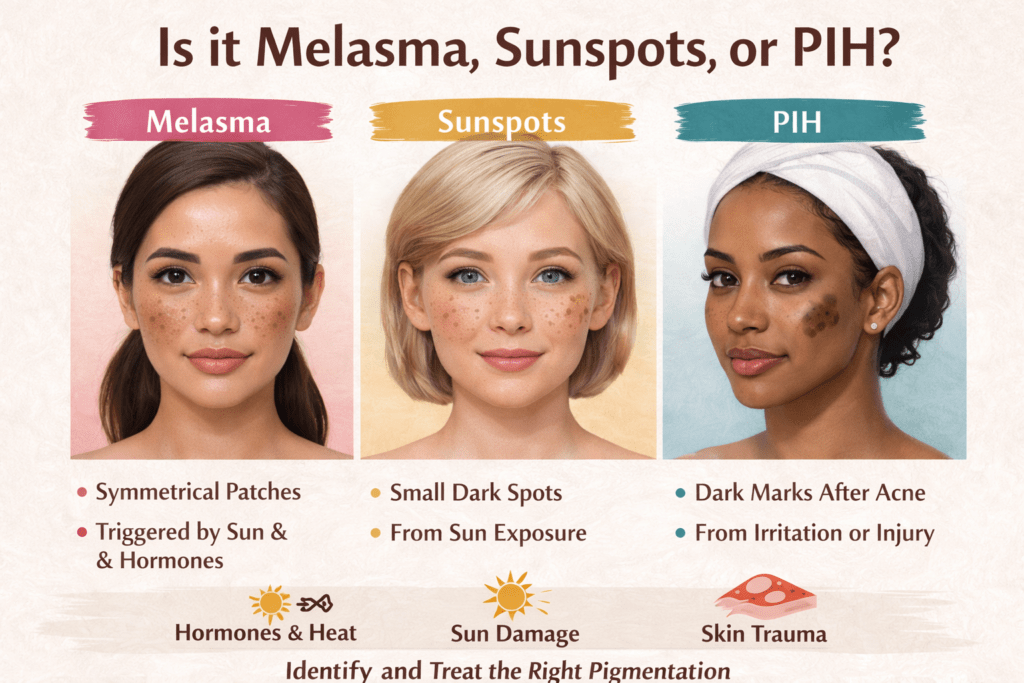
Quick Overview: Key Differences at a Glance
Melasma
Appears as symmetrical patches
Triggered by sun exposure, heat, and hormones
Commonly found on the cheeks, forehead, and upper lip
Sunspots
Appear as individual dark spots
Caused by cumulative sun damage over time
Typically develop later in life
Post-Inflammatory Hyperpigmentation (PIH)
Dark marks left after acne, irritation, or injury
Appears exactly where inflammation occurred
Gradually fades with time
What Melasma Looks Like
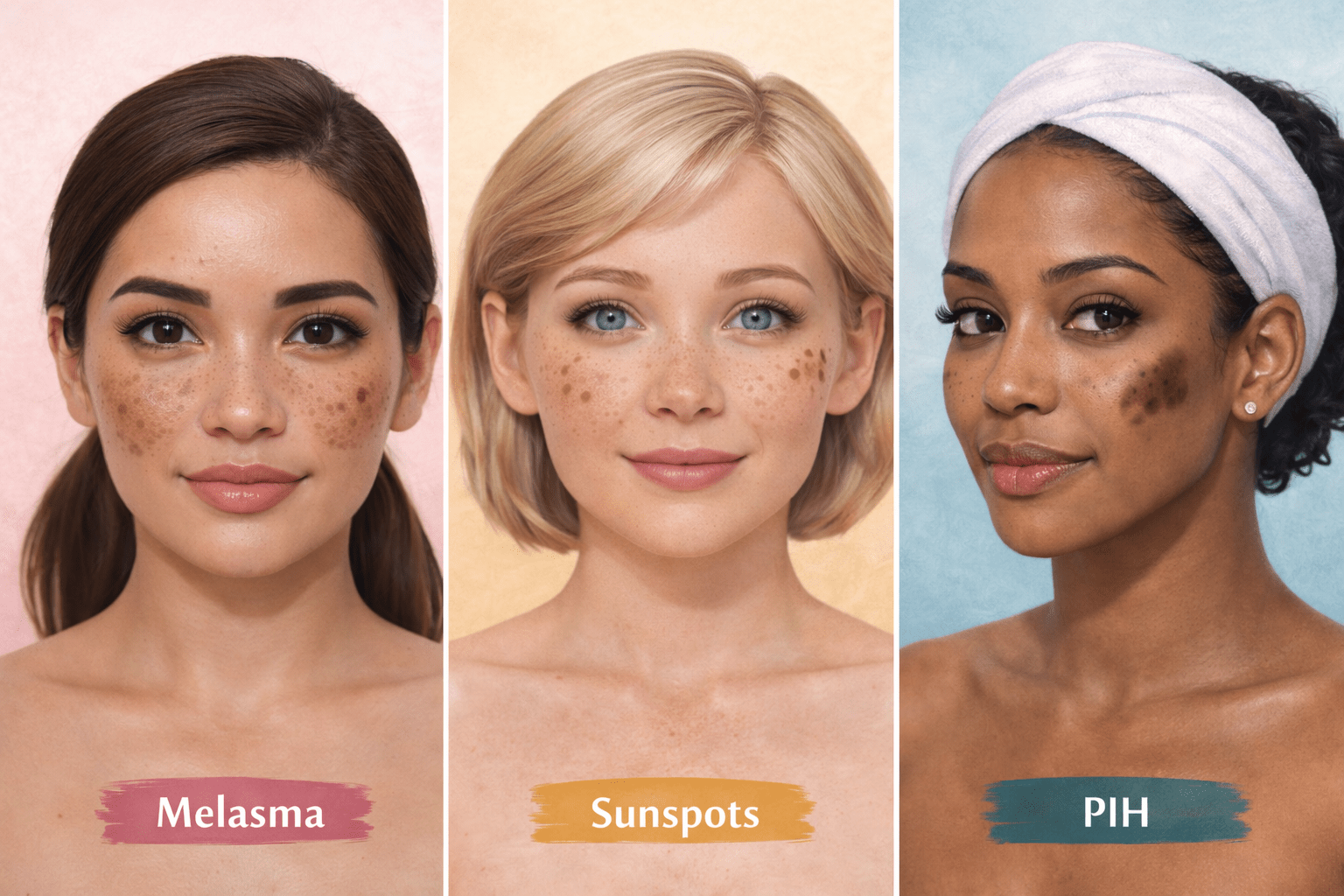
Melasma presents as flat, patchy discoloration that usually appears symmetrically on both sides of the face. Colors may range from light brown to gray-brown or bluish-gray.
Common signs include mirrored placement, smooth skin texture, darkening with sun or heat exposure, and a strong hormonal connection, such as pregnancy or birth control use. If discoloration appears evenly on both sides of the face, it is most likely melasma.
What Sunspots Look Like
Sunspots, also known as age spots or solar lentigines, develop from long-term exposure to the sun.
They typically appear as small to medium round or oval spots with defined borders. Color ranges from light to dark brown. Unlike melasma, sunspots are asymmetrical and often appear on the face, hands, shoulders, and arms.
What PIH Looks Like
Post-inflammatory hyperpigmentation forms after the skin heals from inflammation such as acne, eczema, burns, or irritation.
PIH appears exactly where the inflammation occurred, is not symmetrical, and gradually fades over weeks to months. If a dark mark followed a breakout or skin injury, it is most likely PIH.
How Triggers Help Identify the Type of Pigmentation
Triggers are often the most helpful clue when determining the cause of dark spots.
If pigmentation darkens with heat alone, such as from cooking or exercise, it is likely melasma.
If it worsens primarily with sun exposure, it may be melasma or sunspots.
If it appeared after acne or irritation, it is PIH.
If it develops slowly over many years, it is usually sunspots.
Melasma is the only condition that consistently worsens with heat, even without direct sun exposure.
Why Correct Identification Is Important
Treating the wrong type of pigmentation can make it worse. Melasma may darken with aggressive treatments or heat exposure, PIH can worsen if treated too aggressively too soon, and sunspots may not respond well to gentle brightening products alone.
Correct identification enables safer, more effective treatment and better long-term outcomes.
When to See a Professional
If pigmentation is spreading quickly, turning gray or bluish, affecting large symmetrical areas, or not improving with consistent sun protection, a dermatologist can confirm the diagnosis and recommend appropriate treatment options.
Final Takeaway
Symmetrical patches that worsen with sun and heat are most likely melasma.
Isolated dark spots caused by long-term sun exposure are sunspots.
Dark marks left after acne or irritation are PIH.
Identifying the correct type of pigmentation is the first step toward treating it safely and effectively.