

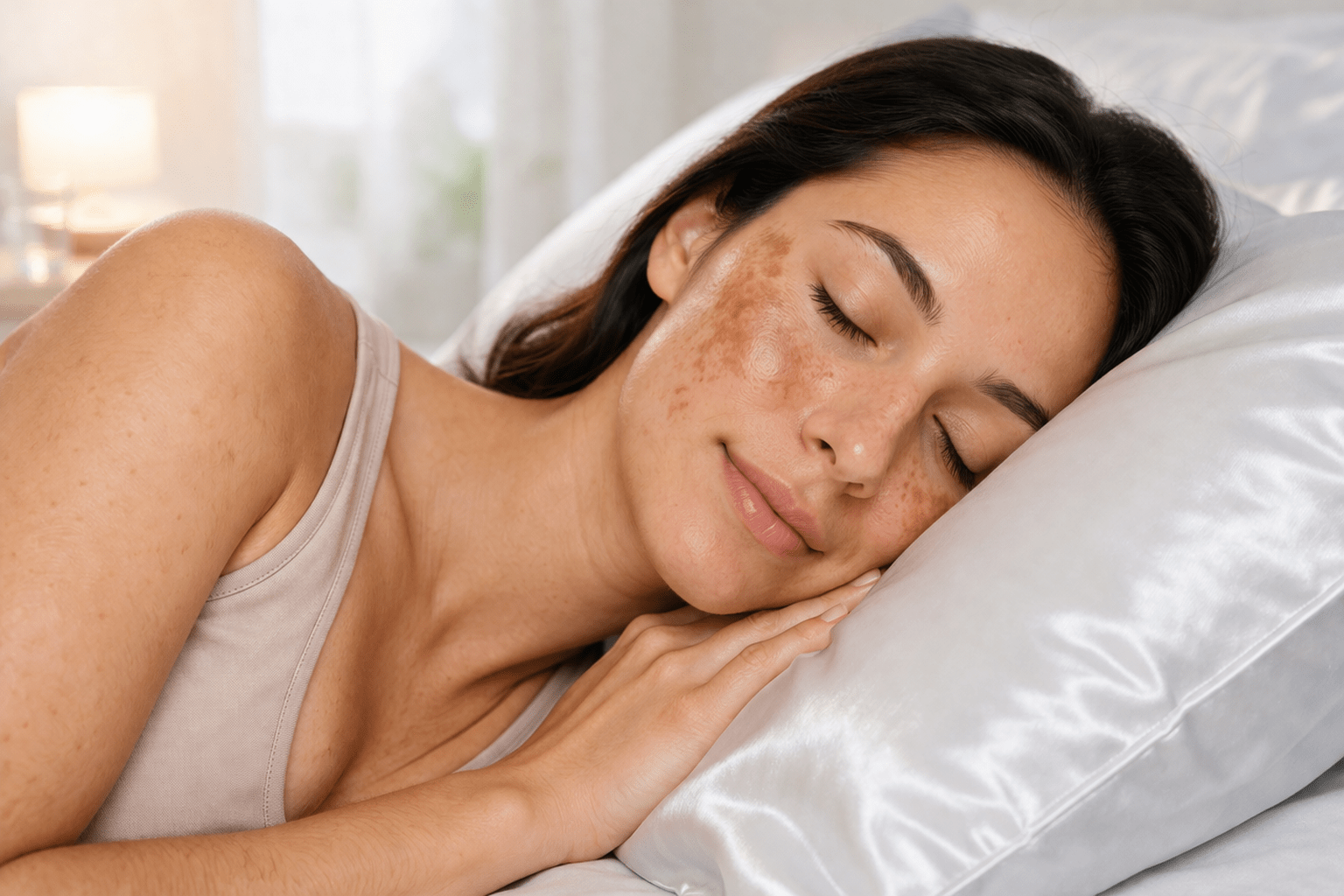
Sleep and Melasma: Does Poor Sleep Make Melasma Worse?
Sleep quality is linked to melasma; poor sleep increases inflammation, disrupts hormones, and worsens pigmentation.
Melasma is a chronic skin condition that causes brown or gray-brown patches, typically on the face. It is influenced by hormones, sun exposure, heat, and internal inflammation. Many people ask, does lack of sleep cause melasma or make it worse? The answer is yes—poor sleep can significantly impact how your skin heals, repairs, and maintains an even tone.
Understanding the connection between sleep and melasma can help you reduce flare-ups and improve your skin from the inside out.
Does Poor Sleep Make Melasma Worse?
Yes, poor sleep can worsen melasma by increasing inflammation, elevating cortisol levels, and slowing skin repair.
Research shows that sleep deprivation raises cortisol (stress hormone) and inflammatory cytokines—both known triggers for increased melanin production and worsening hyperpigmentation.
Why Sleep Is Important for Melasma
1. Sleep Reduces Inflammation
Sleep allows your body to repair and regulate inflammation. During deep sleep, inflammatory markers decrease, helping to calm the skin.
When you do not get enough sleep, inflammatory cytokines increase. These chemicals stimulate melanocytes, leading to more pigment production.
This is a key reason why sleep deprivation and hyperpigmentation are closely linked.
2. Sleep Balances Hormones
Melasma is strongly influenced by hormonal changes, especially estrogen and cortisol.
Lack of sleep raises cortisol levels, which can disrupt hormonal balance and trigger pigmentation. Elevated cortisol also increases internal stress, further worsening melasma.
Consistent sleep helps regulate hormones and stabilize skin function.
3. Sleep Supports Skin Repair and Cell Turnover
Your skin repairs itself while you sleep. During this time, cell turnover increases, helping fade pigmentation and improve skin tone.
If you are sleep-deprived, this repair process slows down. As a result, melasma can become more persistent and harder to treat.
4. Sleep Strengthens the Skin Barrier
A healthy skin barrier is essential for managing melasma. Sleep supports hydration and barrier repair.
Without enough sleep, the skin becomes dehydrated and more sensitive. A weakened barrier allows UV rays, heat, and environmental stressors to worsen pigmentation.
5. Sleep Supports Detox and Liver Function
During sleep, your body performs critical detoxification processes. The liver helps regulate hormones and remove toxins that can contribute to melasma.
Poor sleep can slow these processes, allowing hormonal imbalances and internal stressors to build up.
6. Sleep Reduces Stress (A Major Melasma Trigger)
Stress is a major trigger for melasma. Poor sleep increases stress levels and keeps cortisol elevated.
Better sleep helps regulate your stress response, reducing one of the key underlying causes of pigmentation.
Who Is Most Affected by Poor Sleep and Melasma?
- Women with hormonal melasma
- Individuals with medium to darker skin tones (Fitzpatrick III–VI)
- People with high stress levels
- Those not getting consistent, quality sleep
How Much Sleep Do You Need for Healthy Skin?
Most adults need 7 to 9 hours of quality sleep per night.
Consistency is just as important as duration. Going to bed and waking up at the same time each day helps regulate hormones and improve skin health.
How to Improve Sleep to Help Melasma
If you are struggling with melasma, improving your sleep can make a noticeable difference:
- Stick to a consistent sleep schedule
- Avoid screens at least 30–60 minutes before bed
- Limit caffeine and alcohol in the evening
- Create a cool, dark sleeping environment
- Use a calming nighttime skincare routine
Sleep and Melasma
So, does poor sleep make melasma worse? Yes—lack of sleep can increase inflammation, disrupt hormones, and slow skin repair, all of which contribute to darker pigmentation.
Melasma is not just a surface condition. It is deeply connected to internal health, including sleep quality.
Improving your sleep is one of the most natural and effective ways to support your skin. When combined with proper skincare and daily sun protection, quality sleep can help you achieve a brighter, more even complexion.
If you struggle with sleep, consider supportive options like magnesium supplements, calming teas, or sleep-support blends available on Amazon. Better sleep can lead to reduced inflammation, improved hormone balance, and healthier-looking skin.
The Complete Melasma Care Guide