

Melasma: What Is It? Causes, Symptoms, and Best Treatments
Melasma causes brown, gray brown, or tan patches on the skin, resulting from hyperpigmentation conditions.
What Is Melasma?
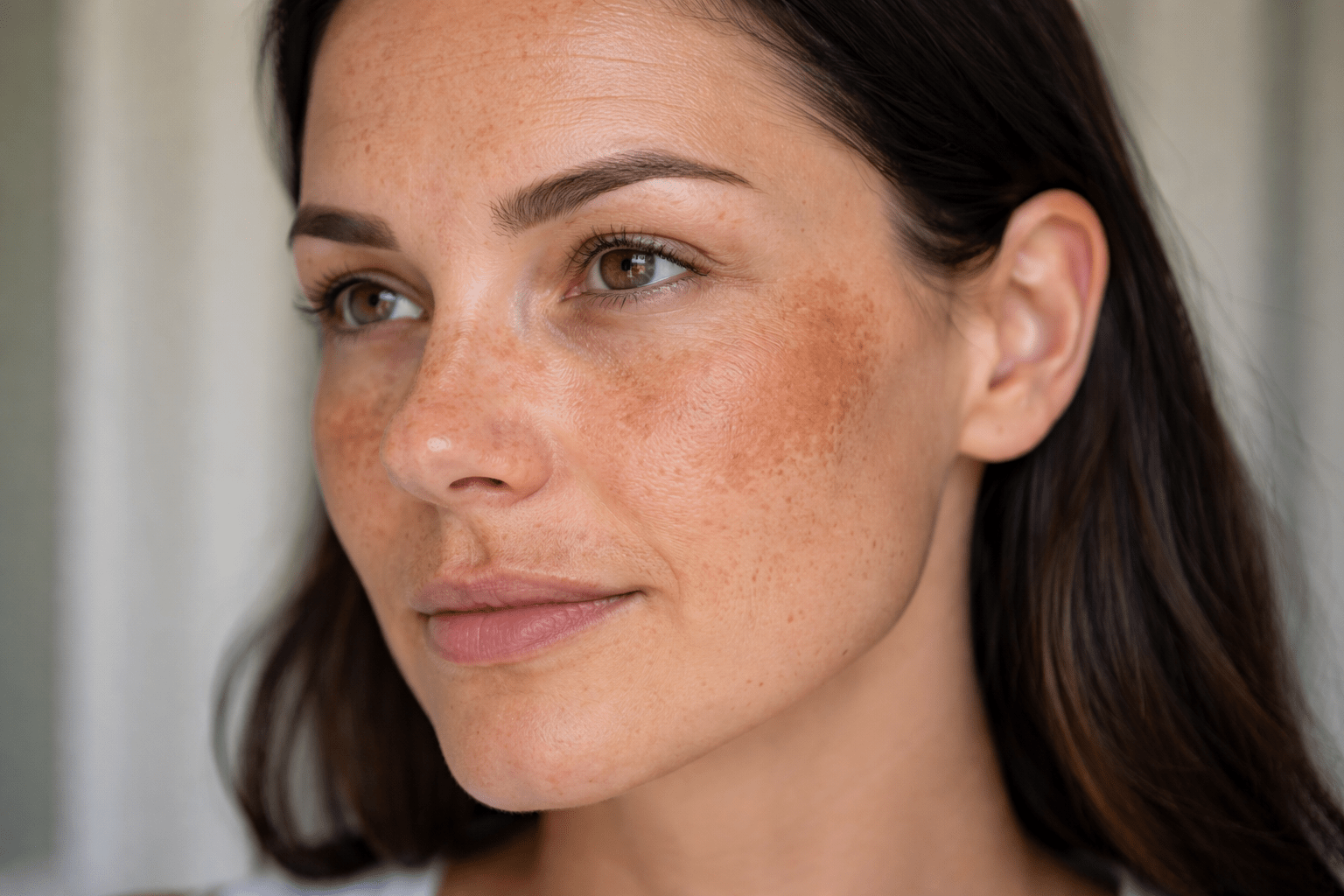
Melasma is a form of hyperpigmentation that appears as brown, gray-brown, or tan patches on the skin. It most commonly develops on the face, including the cheeks, forehead, upper lip, and chin.
This condition occurs when melanocytes (pigment-producing cells) become overactive and produce excess melanin, leading to visible discoloration on the skin’s surface.
Melasma affects up to 30% of women, especially those with medium to darker skin tones.
If you are just starting your journey, it’s helpful to understand how to treat melasma effectively with the right combination of skincare and protection.
What Does Melasma Look Like?
Melasma typically appears as:
- Symmetrical dark patches on both sides of the face
- Flat discoloration (not raised or textured)
- Irregular, blotchy borders
- Gradual darkening over time
It is not painful or itchy, but it can be persistent and cosmetically frustrating.
What Happens in the Skin With Melasma?
Melasma develops when melanocytes are overstimulated by triggers like UV light, heat, and hormones. These cells produce excess melanin, which rises to the upper layers of the skin.
In some cases, pigment can also settle deeper in the dermis, making melasma more resistant to treatment. This is why some people see faster results than others.
What Causes Melasma?
Melasma is caused by a combination of internal and external triggers. Understanding these triggers can help you better manage and prevent flare-ups.
Sun Exposure
Ultraviolet (UV) rays are the biggest trigger. They stimulate melanocytes, increasing pigment production—even with minimal exposure. Using the best sunscreen for melasma daily is one of the most important steps in preventing worsening.
Hormones
Hormonal changes—such as pregnancy, birth control, or hormone therapy—can activate melasma. If you want a deeper understanding, learning about hormones that cause melasma can help you identify your personal triggers.
Heat and Visible Light
Heat (like saunas or hot weather) and visible light (including screens) can worsen melasma, even without direct sun exposure.
Genetics
If melasma runs in your family, you are more likely to develop it.
Types of Melasma
Melasma can vary depending on how deep the pigment is:
- Epidermal Melasma: Pigment sits on the surface and is easier to treat
- Dermal Melasma: Pigment is deeper and more stubborn
- Mixed Melasma: A combination of both types
A professional evaluation can help determine your specific type.
Is Melasma Permanent?
Melasma is not permanent, but it is chronic. This means it can improve significantly with treatment but may return if triggers like sun exposure or hormones are not controlled.
Long-term management is key.
Best Treatments for Melasma
Daily Sunscreen (Most Important Step)
Using sunscreen every day is non-negotiable. Choosing the best sunscreen for melasma—especially one with zinc oxide or iron oxide—helps protect against both UV and visible light.
Topical Skincare Ingredients
Effective ingredients include:
- Hydroquinone
- Tretinoin
- Azelaic acid
- Niacinamide
- Thiamidol
- Medical Grade Vitamin C
Using ingredients like tretinoin for melasma can help increase skin cell turnover, while thiamidol for melasma targets pigment at its source.
Professional Treatments
For more stubborn melasma, professional treatments may be needed:
- Chemical peels
- Laser and light treatments
- Medical-grade facials
These should always be done under professional guidance to avoid worsening pigmentation.
Lifestyle Tips to Prevent Melasma
- Wear a wide-brim hat and sunglasses outdoors
- Reapply sunscreen every 2 hours
- Avoid excessive heat (hot yoga, saunas)
- Stick to a consistent skincare routine
- Be mindful of hormonal triggers
FAQs About Melasma
Can melasma go away on its own?
It can fade, especially if hormone-related, but most cases require consistent treatment.
Can sunscreen alone fix melasma?
No, but it is essential to prevent it from worsening and protect your progress.
What makes melasma worse?
Sun exposure, heat, hormones, and inconsistent skincare routines.
When to See a Professional
If your melasma is not improving with over-the-counter products, it’s best to seek professional guidance. A customized treatment plan can help safely and effectively target pigment.
Melasma is a complex but manageable skin condition. With the right combination of sun protection, targeted skincare, and professional treatments, you can visibly improve your skin and maintain long-term results.
Shop Melasma Skincare Essentials
If you’re ready to start improving your skin, choosing the right products is key. Consistent use of sunscreen, brightening serums, and targeted treatments can make a noticeable difference over time.
You can find some of the most trusted and recommended melasma skincare products on Amazon, including sunscreens, vitamin C serums, and gentle retinoids that help support clearer, more even-toned skin.
👉 Shop Melasma Skincare Essentials Here
The Complete Melasma Care Guide