

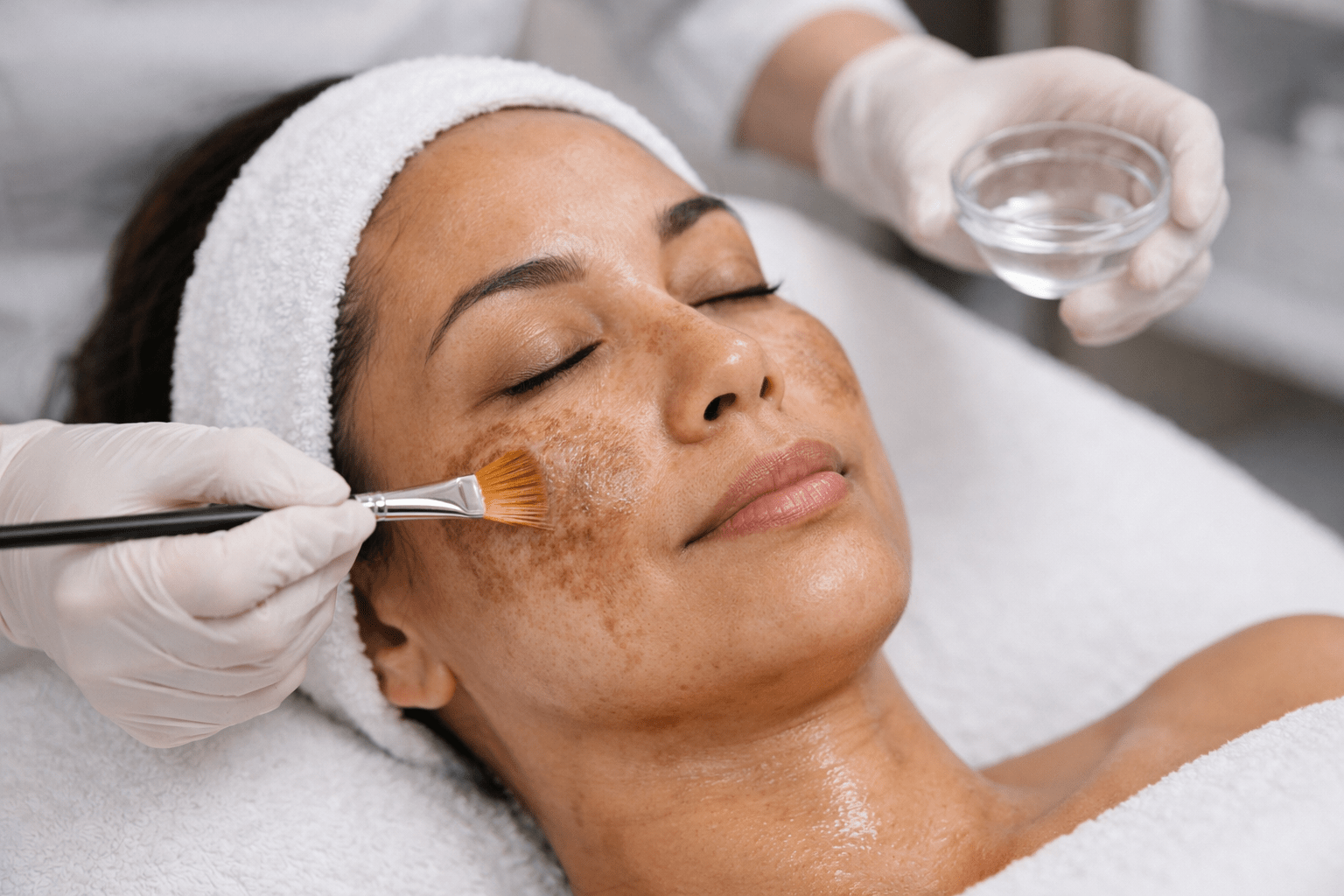
Gentle Chemical Peels For Melasma Management
Gentle chemical peels can support melasma management by exfoliating surface pigment while minimizing irritation risks.
Gentle chemical peels are a well-established option for managing stubborn facial melasma. When used correctly, mild peels help improve uneven pigmentation by exfoliating the upper layers of skin where excess melanin accumulates.
How Gentle Chemical Peels Help Fade Melasma
Melasma often affects the epidermis, the skin’s outermost layer. Mild chemical peels work by encouraging controlled exfoliation, allowing darkened, pigmented skin cells to shed gradually. Over time, this process can help improve overall skin tone and clarity.
Unlike aggressive peels, gentle formulations focus on pigment reduction without damaging the skin barrier.
Why Strong Chemical Peels Should Be Avoided for Melasma
Heavy or deep chemical peels can worsen melasma rather than improve it. High acid concentrations may trigger inflammation, leading to post-inflammatory hyperpigmentation and, in some cases, scarring.
Gentle chemical peels are safer because they use lower acid strengths and controlled application techniques, making them more suitable for melasma-prone and sensitive skin.
How Often Should You Use Gentle Chemical Peels?
Mild chemical peels can typically be used once per month to help exfoliate superficial pigment safely. Various peel strengths are available, and multiple light layers may be applied to enhance results while maintaining skin safety.
This gradual approach is especially important for individuals with medium to darker skin tones.
Why Skin Prep Is Essential Before Chemical Peels
Proper skin preparation is critical before using chemical peels for melasma. Prepping helps ensure even penetration and reduces the risk of post-inflammatory hyperpigmentation.
A 4–8 week preparation period is generally recommended. Hydroquinone at a 4% concentration is considered the gold standard for prep due to its ability to suppress pigment production. If using 2%, a longer prep period may be needed.
When hydroquinone is not appropriate, alternative prep ingredients include vitamin C, retinol, or niacinamide.
Post-Peel Care: Sun Protection Is Non-Negotiable
After any chemical peel, daily sun protection is essential. A broad-spectrum sunscreen with high zinc oxide content helps protect treated skin and prevents melasma from darkening.
Skipping sunscreen can quickly reverse progress made with peels and skincare treatments.
Limitations of Gentle Chemical Peels for Melasma
Gentle chemical peels are most effective for epidermal melasma. They do not penetrate deeply enough to treat dermal melasma. For deeper pigmentation, antioxidant skincare and nutritional support may help reduce oxidative stress and inflammation from within.
When choosing an at-home chemical peel for melasma, Perfect Image provides gentle formulations designed for controlled exfoliation. When used conservatively, with proper skin preparation and consistent sun protection, these peels may help support the management of epidermal melasma without increasing irritation.
Many Perfect Image peels are available for purchase on Amazon, offering a range of gentle formulations suitable for controlled exfoliation when used appropriately for melasma-prone skin.
Clinical Study On Peels For Melasma