

Does Alcohol Make Melasma Worse? Causes, Triggers, and How to Protect Your Skin
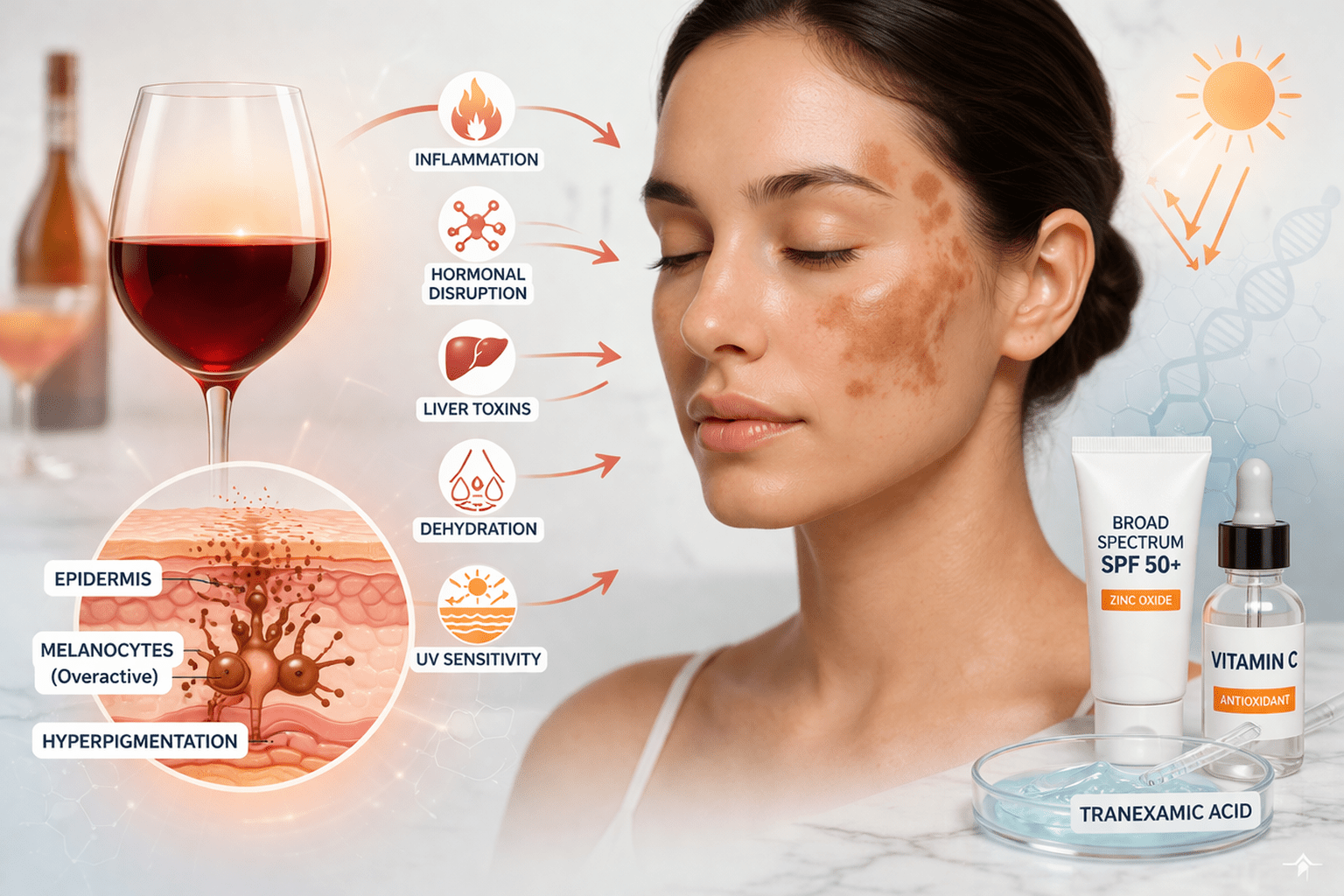
Alcohol can worsen melasma by triggering inflammation, hormonal changes, and increased pigmentation in the skin.
Melasma is a chronic skin condition that causes brown or gray-brown patches, usually on the face. It is triggered by hormones, sun exposure, heat, and internal inflammation. If you are wondering, does alcohol make melasma worse, the answer is yes—and understanding why can help you better control your skin.
Why Does Alcohol Make Melasma Worse?
1. Alcohol Increases Inflammation
Alcohol increases inflammation in the body by releasing inflammatory molecules called cytokines, which stimulate melanocytes to produce more pigment.
If you are asking, does alcohol make melasma worse, inflammation is one of the biggest reasons your dark spots may appear darker after drinking.
2. Alcohol Causes Heat and Flushing
Alcohol leads to vasodilation, meaning your blood vessels expand and increase blood flow to the skin. This causes redness and heat in the skin.
Heat is a known trigger for melasma because it activates pigment-producing cells, making discoloration more noticeable.
3. Alcohol Disrupts Hormones
Melasma is strongly linked to hormones, especially estrogen. Alcohol interferes with how the liver metabolizes hormones, which can lead to imbalances.
Hormonal fluctuations are one of the main triggers of melasma and can cause pigmentation to worsen quickly.
4. Alcohol Weakens Liver Function
Your liver plays a key role in detoxifying excess hormones and toxins. Alcohol places stress on the liver, reducing its ability to efficiently process these substances.
When detox pathways slow down, excess hormones can circulate longer in the body, contributing to melasma flare-ups.
5. Alcohol Dehydrates the Skin
Alcohol is a diuretic, meaning it pulls water from your body and skin. This leads to dehydration and a weakened skin barrier.
A compromised skin barrier makes the skin more sensitive to triggers like heat and UV exposure, worsening melasma.
6. Alcohol Increases Sun Sensitivity
If you are wondering, does alcohol make melasma worse in the sun, the answer is yes.
Alcohol increases photosensitivity, meaning your skin becomes more reactive to UV exposure. Even minimal sun exposure can deepen pigmentation when combined with inflammation and heat.
Who Is Most Likely to Notice Melasma Worsen with Alcohol?
- Women with hormonal melasma
- Individuals with medium to darker skin tones (Fitzpatrick III–VI)
- People prone to redness or inflammation
- Anyone not consistently wearing daily sunscreen
How to Prevent Melasma from Getting Worse When Drinking
If you choose to drink, there are ways to protect your skin:
- Wear a zinc oxide sunscreen daily
- Stay well hydrated before and after drinking
- Avoid alcohol before sun exposure
- Use antioxidant skincare like vitamin C
- Incorporate brightening ingredients such as tranexamic acid or thiamidol
Does Alcohol Make Melasma Worse?
So, does alcohol make melasma worse? Yes, it can worsen pigmentation through inflammation, hormonal imbalance, dehydration, and increased sun sensitivity.
Dermatology research shows that inflammation, heat, and hormonal imbalance are key triggers in worsening melasma.
Melasma is not just a surface condition—it is influenced by internal health. Reducing alcohol intake, even slightly, can make a noticeable difference in your skin.
If you are not ready to stop drinking, you can still support your skin from within. Look for high-quality antioxidant supplements, liver-support formulas, and hydration products on Amazon to help reduce inflammation and keep your skin balanced.
The Complete Melasma Care Guide