

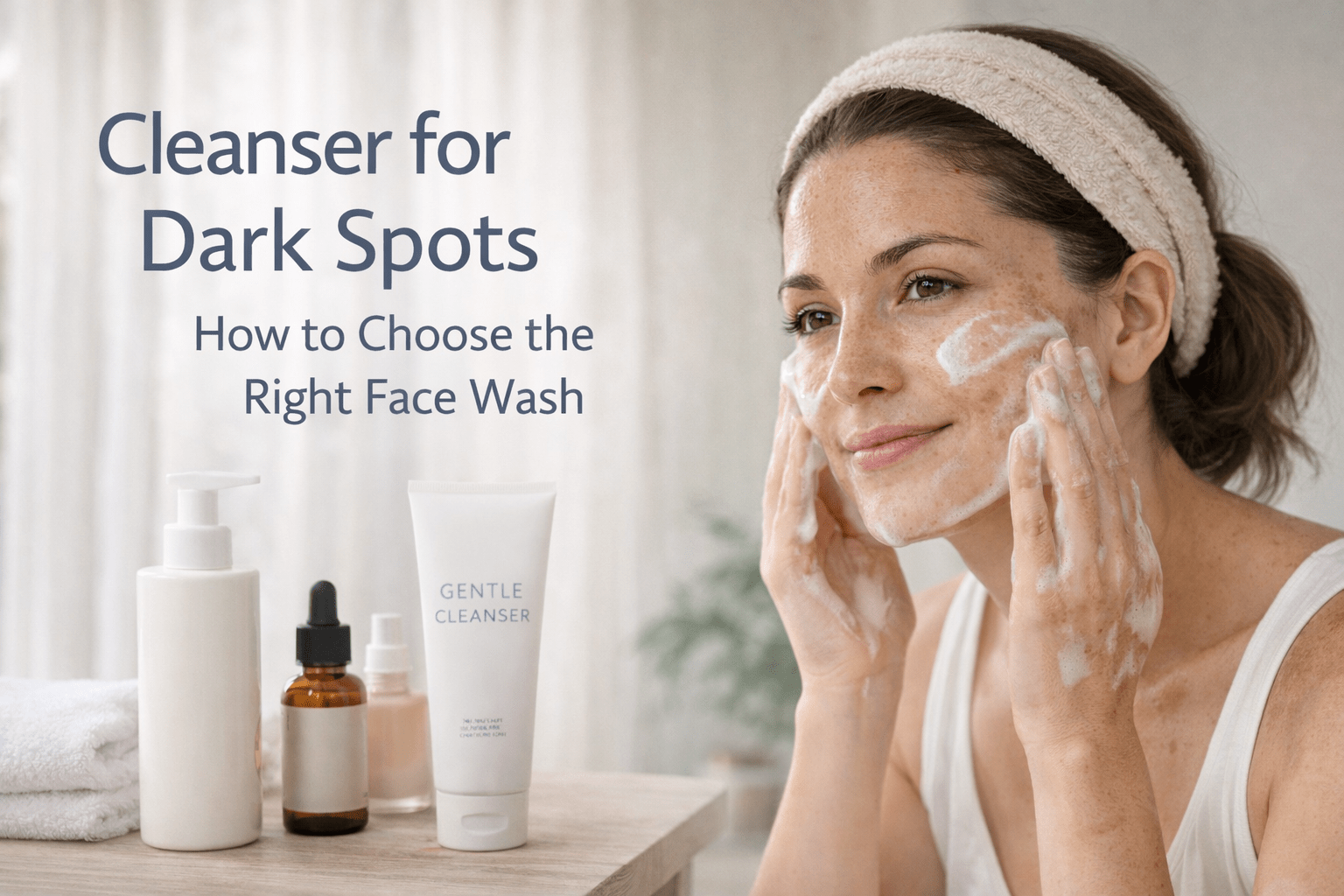
Cleanser for Dark Spots: How to Choose the Right Face Wash
Dark spots and uneven skin tone can be frustrating, especially when they seem slow to fade.
While cleansers alone won’t erase dark spots or melasma, choosing the right face wash plays an important role in supporting healthier, more balanced skin.
A well-formulated cleanser helps remove impurities, excess oil, sunscreen buildup, and environmental debris while protecting the skin barrier — which is essential for preventing irritation that can worsen pigmentation.
This guide explains what to look for in a cleanser for dark spots, the best ingredients to support brighter-looking skin, and how to use your cleanser as part of a complete skincare routine.
Why Cleansers Matter for Dark Spots
Cleansing is the foundation of any skincare routine.
For skin prone to dark spots or melasma, using a harsh or stripping cleanser can trigger inflammation, dryness, and sensitivity — all of which may make pigmentation more noticeable over time.
A gentle cleanser helps by:
- removing dirt, oil, and sunscreen buildup
- supporting the skin’s natural barrier
- preparing skin for serums and moisturizers
- reducing irritation that can worsen discoloration
While cleansers do not directly fade dark spots, the right one helps create the best environment for skin improvement.
Best Ingredients to Look for in a Cleanser for Dark Spots
While a cleanser alone may not completely remove dark spots, the right ingredients can help support brighter, healthier-looking skin over time.
Look for cleansers that contain:
- niacinamide to help improve uneven tone and strengthen the skin barrier
- PHA or gentle AHAs for mild exfoliation
- ceramides to support skin repair
- glycerin to keep skin hydrated
- vitamin C derivatives in gentle formulas
For melasma-prone skin, it is best to avoid harsh scrubs or overly strong acids that may increase inflammation and worsen pigmentation.
For more support, read our guide on what melasma is and how it develops on the face.
What to Look for in a Cleanser for Dark Spots
When selecting a cleanser, focus on gentleness and skin-supportive ingredients rather than harsh exfoliation.
Key Features to Look For
- mild, non-stripping surfactants
- fragrance-free or low-irritation formulas
- hydrating ingredients that support the skin barrier
Beneficial Ingredients
- Niacinamide – supports skin barrier and tone
- Glycerin or hyaluronic acid – help maintain hydration
- Ceramides – support barrier health
- Gentle exfoliating acids in low concentrations – optional for tolerant skin only
Avoid cleansers with strong scrubs, high alcohol content, or overly aggressive exfoliation, as these can worsen pigmentation over time.
Best Cleanser Types for Dark Spots
Choosing the right cleanser texture for your skin type helps maintain balance and reduce irritation.
Sensitive or Melasma-Prone Skin
- cream cleansers
- hydrating gel cleansers
- fragrance-free formulas
- non-foaming or low-foam options
Oily or Combination Skin
- gentle foaming cleansers with hydrating ingredients
- avoid over-cleansing or multiple washes per day
Dry or Dehydrated Skin
- cream cleansers
- hydrating facial washes
- avoid sulfate-based cleansers
How to Use Your Cleanser for Best Results
Using the right technique matters just as much as the product itself.
- cleanse twice daily in the morning and evening
- use lukewarm water and avoid hot water
- massage gently for 30–60 seconds
- pat skin dry rather than rubbing
- follow immediately with moisturizer and sunscreen in the morning
Consistency is key.
Over-cleansing or frequent product switching can slow progress.
The Role of Cleansing in a Dark Spot Routine
Cleansing is just one step in managing dark spots.
For best results, pair your cleanser with:
- daily broad-spectrum sunscreen
- gentle brightening serums
- barrier-supportive moisturizers
- consistent long-term care
A well-rounded routine helps minimize flare-ups and supports gradual improvement.
Recommended Cleansers for Dark Spots
The following cleanser types are commonly used in routines designed to support gentle cleansing and balanced skin tone.
These options focus on barrier support, hydration, and low irritation — key factors for pigmentation-prone skin.
- hydrating facial cleanser for sensitive skin
- gentle foaming cleanser with niacinamide
- cream cleanser for dry or melasma-prone skin
These types of cleansers are suitable for daily use and work well alongside targeted treatment products.
Continue Your Dark Spot Journey
For the best results, pair your cleanser with a complete skincare routine that includes brightening serums, barrier support, and daily mineral sunscreen.
For a full educational guide, read our article on what melasma is and how it develops on the face.
You can also download our ebook for a step-by-step melasma and dark spot skincare routine.
Recommended Next Read
Ready to build the perfect skincare routine for dark spots?
Explore our guide to the best cleansers for melasma and uneven skin tone to find gentle daily options that support brighter, healthier-looking skin.
If you are struggling with stubborn pigmentation, read our full guide on what melasma is and how to treat it naturally.