
Best Toner for Melasma: How to Choose the Right Toner for Dark Spots
Dark patches and uneven skin tone from melasma can be frustrating, but the right toner helps support brighter-looking skin.
Melasma is a common skin condition that causes brown or gray-brown patches, most often on the cheeks, forehead, upper lip, and chin. It is often triggered by sun exposure, hormones, heat, and inflammation.
Because melasma sits deeper in the skin than simple surface pigmentation, it can be difficult to fade without a consistent skincare routine.
One product that is often overlooked is toner.
While toner alone will not erase melasma, the right formula can help calm the skin, improve hydration, and support ingredients that target dark spots over time.
If you are new to this condition, it also helps to understand what melasma is and how it develops on the face before choosing skincare products.
What Does a Toner Do for Melasma?
A toner is designed to be used after cleansing and before serums or moisturizers.
For melasma-prone skin, a toner can help:
- restore hydration after cleansing
- calm irritation and redness
- support the skin barrier
- gently improve uneven tone
- prepare the skin for brightening serums
Melasma often worsens when the skin becomes inflamed or irritated.
That is why it is important to choose a gentle toner that supports skin health instead of stripping it.
Harsh alcohol-based toners can worsen hyperpigmentation and trigger more inflammation.
Best Ingredients to Look for in a Toner for Melasma
The best toner for melasma and hyperpigmentation should include ingredients that brighten the skin while keeping it calm.
Look for toners with:
- niacinamide to help improve uneven tone and strengthen the skin barrier
- tranexamic acid to support brightening and reduce the look of discoloration
- PHA or gentle AHAs for mild exfoliation
- glycerin and hyaluronic acid for hydration
- centella asiatica or green tea to calm inflammation
- licorice root extract to help reduce dark spots
These ingredients work best when used consistently over time.
Ingredients to Avoid if You Have Melasma
Not every toner is safe for melasma-prone skin.
Try to avoid:
- high alcohol content
- witch hazel in drying formulas
- strong glycolic acid toners
- rough exfoliating pads used too often
- fragrance-heavy formulas
Melasma skin tends to react to irritation, heat, and inflammation.
Even products marketed for brightening can sometimes worsen pigmentation if they are too harsh.
Best Toner Types by Skin Type
For dry melasma-prone skin
Choose hydrating toners with:
- hyaluronic acid
- ceramides
- glycerin
- niacinamide
For oily or acne-prone skin
A gentle exfoliating toner with:
- PHA
- lactic acid
- niacinamide
can help improve tone without over-drying the skin.
For sensitive skin
Look for calming formulas with:
- centella
- green tea
- aloe
- panthenol
How to Use Toner for Dark Spots and Melasma
Use toner after cleansing.
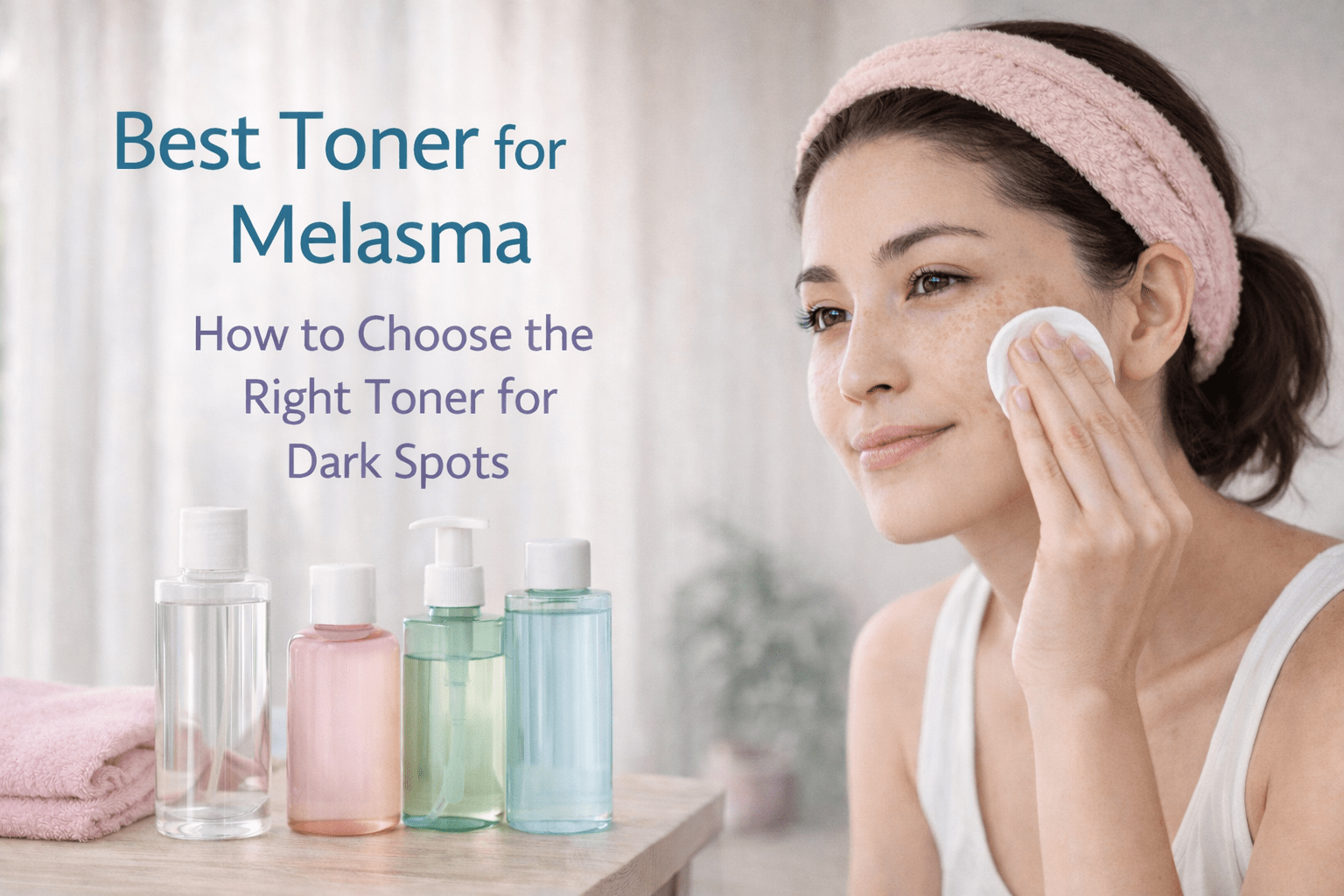
Apply with clean hands or a soft cotton pad.
Follow with:
- brightening serum
- moisturizer
- daily mineral sunscreen
Sunscreen is one of the most important steps in melasma care.
Without daily sun protection, even the best toner for dark spots will not provide the results you want.
For more support, read our guide on how to build a melasma skincare routine.
Can Toner Fade Melasma?
A toner alone will not completely remove melasma.
However, the right toner can support brighter, healthier-looking skin and help improve how well your treatment products absorb.
Think of toner as a supportive step in your routine rather than the main treatment.
The most effective melasma routine usually includes:
- gentle cleanser
- toner
- brightening serum
- moisturizer
- SPF 50 mineral sunscreen
Frequently Asked Questions About Toner for Melasma
Can toner make melasma worse?
Yes, harsh or alcohol-based toners may increase irritation and worsen pigmentation.
Is niacinamide toner good for melasma?
Yes, niacinamide is one of the best ingredients for uneven skin tone and barrier support.
Should I use toner every day?
A gentle hydrating toner can usually be used once or twice daily.
Choosing the Best Toner for Melasma
The best toner for melasma is one that hydrates, calms inflammation, and supports the skin barrier without irritation.
Look for ingredients like niacinamide, tranexamic acid, and gentle hydrators.
For best results, pair your toner with a brightening serum and daily sunscreen.
For a complete step-by-step guide, visit our page on what melasma is and how it develops on the face, and explore more educational skincare tips on Serene Skin Health.