

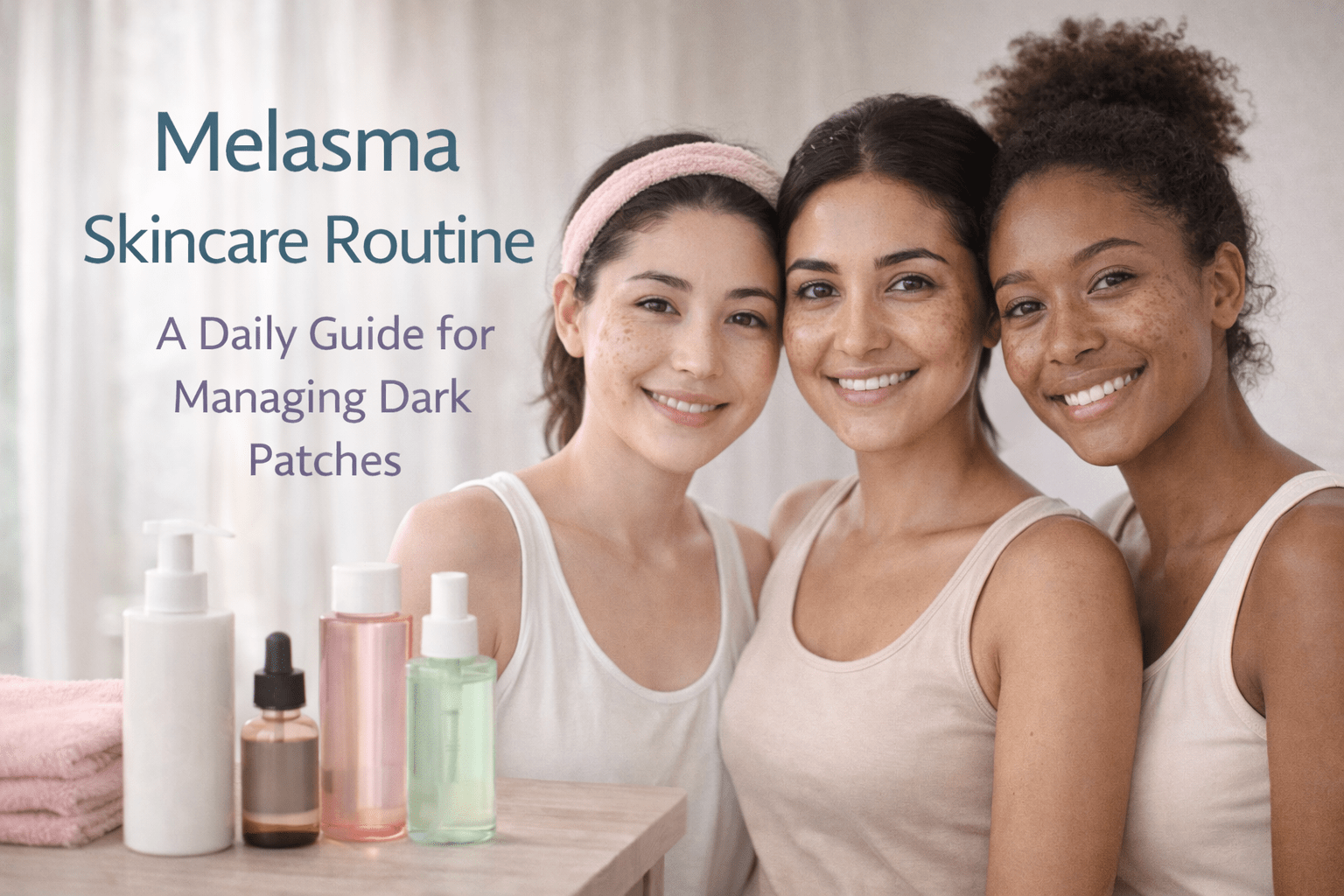
Melasma Skincare Routine
Melasma is a chronic form of hyperpigmentation that appears as brown or grayish patches, most commonly on the face. Because melasma is influenced by sun exposure, heat, hormones, and inflammation, managing it requires a consistent, gentle, and well-structured skincare routine rather than quick fixes.
While melasma cannot always be permanently cured, the right daily routine can help reduce flare-ups, support more even-looking skin, and prevent further darkening over time.
This guide outlines a simple, dermatologist-aligned melasma skincare routine, including morning and evening steps, key ingredients, and realistic expectations.
Why a Skincare Routine Matters for Melasma
Melasma-prone skin is often sensitive and reactive. Using the wrong products — or too many aggressive treatments — can trigger inflammation and worsen pigmentation.
A well-designed routine helps by:
- Supporting the skin barrier
- Minimizing irritation and inflammation
- Protecting against UV and visible light
- Creating consistency for long-term improvement
The goal is calm, protected skin, not harsh correction.
Morning Melasma Skincare Routine
Your morning routine focuses on gentle cleansing, antioxidant protection, and sun defense — the most critical step for melasma management.
1. Gentle Cleanser
Start with a mild, non-stripping cleanser to remove oil and overnight buildup without disrupting the skin barrier.
Look for:
- Fragrance-free formulas
- Hydrating or low-foam cleansers
- Ingredients like glycerin or ceramides
Avoid harsh exfoliating cleansers in the morning.
2. Hydrating or Soothing Toner
A gentle toner can help restore hydration after cleansing and prepare skin for serums.
Choose:
- Alcohol-free formulas
- Hydrating or calming ingredients
- Lightweight textures
This step is optional but helpful for dry or sensitive skin.
3. Antioxidant or Brightening Serum
Serums help support even skin tone and protect against environmental stressors.
Commonly used ingredients in melasma routines include:
- Vitamin C for antioxidant support
- Niacinamide to support barrier health and tone
- Tranexamic acid in gentle formulations
Introduce new serums slowly to avoid irritation.
4. Moisturizer
A lightweight moisturizer helps seal in hydration and support the skin barrier.
Look for:
- Ceramides
- Glycerin
- Non-comedogenic formulas
Barrier health is key for reducing sensitivity and flare-ups.
5. Broad-Spectrum Sunscreen (Most Important Step)
Daily sun protection is essential for managing melasma. Even minimal sun exposure can trigger darkening.
Best practices:
- Use broad-spectrum SPF 30–50
- Prefer mineral sunscreens when possible
- Apply generously and evenly
- Reapply every 2 hours when outdoors
Tinted mineral sunscreens with iron oxides offer additional protection against visible light.
Evening Melasma Skincare Routine
The evening routine focuses on gentle cleansing, targeted treatment, and repair.
1. Gentle Cleanse
Remove sunscreen, makeup, and impurities using a mild cleanser. If wearing heavy makeup or sunscreen, a gentle double cleanse may be helpful.
Avoid scrubbing or aggressive tools.
2. Treatment Serums
Nighttime is ideal for targeted treatments that support pigment control.
Ingredients often used in melasma routines include:
- Niacinamide
- Azelaic acid
- Tranexamic acid
- Retinoids (low strength, used cautiously)
Start with one active at a time and use only a few nights per week if you’re sensitive.
3. Moisturizer
Finish with a nourishing moisturizer to support overnight repair and reduce irritation.
Well-hydrated skin is more resilient and better able to tolerate treatment products.
Key Ingredients Commonly Used for Melasma
While results vary by individual, these ingredients are commonly included in melasma-focused routines:
- Niacinamide: supports barrier function and even tone
- Tranexamic acid: often used for pigment support
- Azelaic acid: calming and brightening properties
- Vitamin C: antioxidant support
- Ceramides: strengthen the skin barrier
Not every ingredient works for everyone — consistency and tolerance matter more than intensity.
What to Avoid When Managing Melasma
- Over-exfoliation
- Strong scrubs or harsh acids
- Fragranced products that cause irritation
- Skipping sunscreen
- Frequently changing products
More aggressive routines often backfire with melasma.
How Long Does It Take to See Results?
Melasma improvement takes time and consistency. Many people notice gradual changes over 8–12 weeks with proper sun protection and a supportive routine.
Flare-ups can still occur due to sun exposure, hormones, or heat — even with good care. Maintenance is ongoing.
When to Seek Professional Guidance
If melasma is persistent or worsening, a dermatologist or licensed skincare professional can help determine whether prescription treatments or in-office procedures may be appropriate.
Professional guidance is especially important for deeper or hormonally driven melasma.
Final Thoughts
Managing melasma is about protecting, calming, and supporting the skin long-term. A gentle, consistent skincare routine — combined with daily sun protection — can make a meaningful difference in how melasma looks and behaves over time.